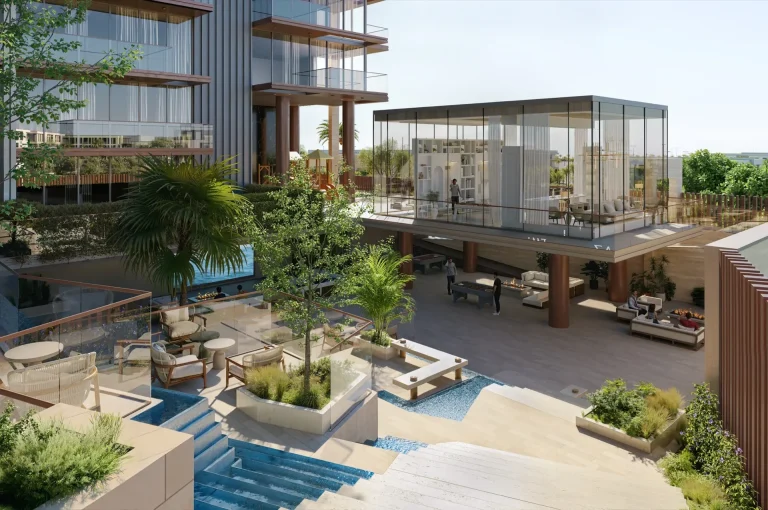
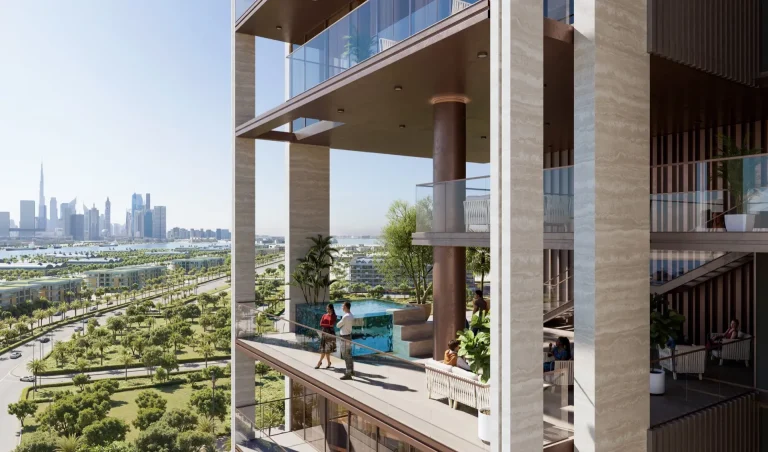
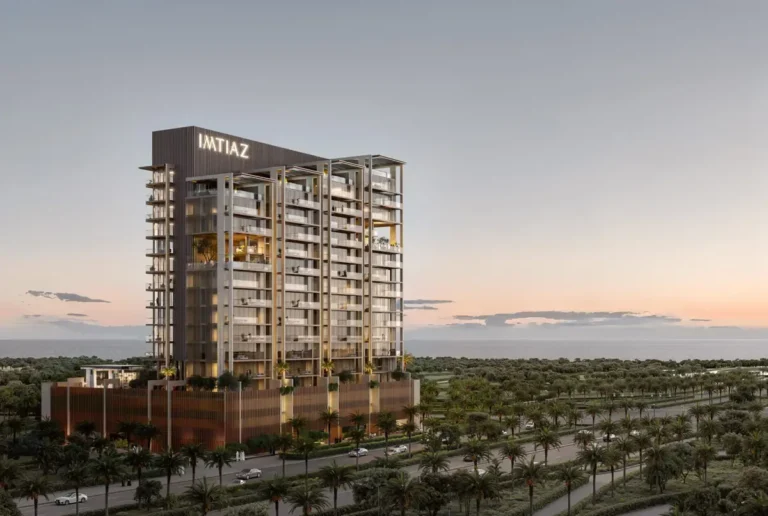
The Dubai real estate market continues to captivate global investors with its extraordinary resilience and remarkable growth momentum as we move deeper into 2026. The emirate has evolved far beyond its reputation as merely another property hotspot, instead emerging as a definitive benchmark for modern urban development excellence and Dubai property investment opportunities that outperform most global markets in both stability and returns.
Understanding the trajectory of this dynamic market requires examining the foundational strengths that underpin its sustained expansion. The city’s population has surged well past four million residents during the first quarter of 2026, representing consistent growth that creates genuine housing demand rather than speculative bubbles. Tourism infrastructure continues strengthening, with visitor arrivals projected to exceed twenty million overnight guests annually, a milestone that reinforces both short-term rental profitability and long-term investor confidence in the Dubai real estate market.
The economic diversification strategy that Dubai has pursued for over two decades now demonstrates tangible results that separate this market from resource-dependent regional economies. The transport, logistics, and technology sectors drive economic expansion, creating employment opportunities that attract skilled professionals from across the globe. This employment growth generates organic housing demand that supports sustainable price appreciation rather than the volatile boom-bust cycles that characterize less diversified economies, making real estate investment in Dubai particularly attractive for risk-conscious investors seeking stable wealth accumulation.
The Off-Plan Dominance Reshaping Investment Approaches
Perhaps the most transformative Dubai real estate trend 2026 involves the complete dominance of off-plan properties in Dubai within transaction volumes. Recent market data reveals that pre-construction purchases now constitute approximately seventy-five percent of all residential property sales, fundamentally changing how both individual investors and institutional capital approach the Dubai property market.
This overwhelming preference for off-plan projects in Dubai reflects sophisticated investor recognition of the compelling value proposition these opportunities present. Buyers consistently secure properties at launch prices that sit twenty to thirty-five percent below projected completion values, creating immediate equity positions even before taking possession. The flexible payment structures that developers offer, typically requiring just a ten percent down payment with seventy percent spread across construction milestones and twenty percent due upon handover, dramatically lower the barriers to entry while preserving capital for portfolio diversification across multiple assets.
For investors exploring strategic positioning within Dubai property investment sweet spot opportunities, the 2026 calendar year represents particularly fertile ground for wealth creation. Market analysts now project that carefully selected off-plan acquisitions during this twelve-month window could deliver compounded annual returns approaching twelve to fifteen percent through project completion and initial rental phases, substantially exceeding returns available from traditional investment vehicles while maintaining tangible asset backing.
The structural shift toward pre-construction acquisitions also demonstrates growing institutional confidence in Dubai’s regulatory frameworks and developer accountability mechanisms. International buyers increasingly trust that projects will be completed according to announced schedules while maintaining promised quality standards, a confidence that stems from improved regulatory oversight and the professional maturation of Dubai’s development industry. Those seeking to understand the mathematical precision behind these projections should explore a detailed analysis explaining why prelaunch buyers are positioned to realize exceptional twenty-five percent gains through strategic timing and selection criteria.
Geographic Intelligence: Strategic Location Selection for Optimal Performance
Successfully navigating the Dubai real estate investment landscape in 2026 demands a sophisticated understanding of how different geographic submarkets perform under varying economic conditions and investor objectives. Each district within Dubai’s expanding urban footprint offers distinct risk-return profiles that align with specific investment strategies, whether targeting immediate rental income, medium-term capital appreciation, or long-term generational wealth preservation through luxury real estate in Dubai holdings.
The established luxury property market concentrated in prestigious addresses continues demonstrating remarkable strength that defies broader economic headwinds. Palm Jumeirah properties, Emirates Hills estates, and Jumeirah Bay Island residences regularly witness transactions exceeding one hundred million dirhams, establishing new valuation benchmarks that reflect the true scarcity value of these irreplaceable addresses. These prime locations consistently deliver eight to fourteen percent annual appreciation while providing owners with prestige and lifestyle benefits that extend beyond purely financial returns, making them foundational holdings for sophisticated portfolios pursuing luxury apartments in Dubai as core positions.
Meanwhile, emerging communities across Dubai’s periphery present compelling value propositions for investors seeking higher yields without excessive risk exposure. Neighborhoods including Jumeirah Village Circle, Dubai Silicon Oasis, and Dubai Investment Park offer entry points starting around four hundred thousand dirhams, dramatically expanding accessibility for middle-income professionals while delivering rental yields consistently ranging between seven and twelve percent annually. For a comprehensive analysis of these mid-market opportunities, investors should review detailed information about Dubai Investment Park off-plan projects that combine affordability with genuine yield potential.
The strategic importance of infrastructure connectivity cannot be overstated when evaluating location selection for property investment in Dubai. Areas directly connected to major transportation arteries, metro extensions, and employment hubs consistently outperform isolated communities regardless of architectural quality or amenity provision. Dubai South represents perhaps the clearest example of infrastructure-driven value creation, with its positioning adjacent to Al Maktoum International Airport expansion and Expo City permanent developments creating a growth corridor that analysts project could experience thirty-five to fifty percent property value appreciation by 2030. Early positioning within Dubai South properties offers transformative wealth-building potential for investors willing to embrace slightly longer investment horizons.

Villa Market Supremacy Creates Scarcity-Driven Opportunities
The villa market in Dubai exhibits particularly dramatic momentum throughout 2026, substantially outpacing apartment segments across both price appreciation metrics and transaction velocity indicators. Average villa prices have climbed beyond five point eight million dirhams during the first quarter, representing a striking thirty-eight percent year-over-year increase that reflects intense competition for severely limited inventory across established communities.
This villa segment’s strength derives from multiple converging socioeconomic factors that show no signs of reversing. High-net-worth individuals and upper-middle-class families increasingly prioritize spacious, private living environments that provide outdoor amenities, home office flexibility, and family-friendly layouts that apartment configurations cannot match. The fundamental supply constraints within mature villa communities create natural scarcity dynamics that support premium pricing, while new master-planned developments require years to complete and mature, ensuring that demand significantly outstrips supply throughout the medium-term forecast horizon.
Established communities, including Dubai Hills Estate, Arabian Ranches, and Damac Hills 2 exemplify this trend, offering family-oriented environments with comprehensive lifestyle amenities ranging from championship golf courses to internationally accredited schools and convenient retail centers. For investors specifically targeting the villa segment, understanding top developers and communities becomes absolutely essential for identifying projects that combine current livability with optimal long-term appreciation potential rather than merely chasing speculative opportunities.
The villa market’s outperformance also reflects Dubai’s fundamental evolution from a temporary expatriate destination toa permanent residency hub for international families. Golden Visa program participants, who receive ten-year residency rights through property investments exceeding two million dirhams, naturally gravitate toward villa ownership that accommodates multigenerational family structures while simultaneously serving as tangible wealth preservation vehicles that appreciate alongside the emirate’s continued development. This structural demand shift suggests that villa market strength represents a permanent characteristic rather than a temporary cyclical phenomenon.
Technology Revolution Fundamentally Transforming Transaction Processes
The Dubai property market stands at the global forefront of PropTech adoption, implementing technological innovations that fundamentally transform how investors identify suitable opportunities, conduct due diligence evaluations, and complete acquisition transactions. Artificial intelligence platforms now analyze decades of historical transaction data combined with upcoming supply pipeline information and demographic trend projections to forecast future value trajectories with accuracy that approaches sixty-five to seventy percent reliability, dramatically reducing the information asymmetry that traditionally disadvantaged individual investors competing against institutional capital.
Virtual reality and augmented reality technologies have completely democratized access to Dubai real estate investment opportunities for international buyers located thousands of kilometers from the emirate. Prospective investors can now conduct extraordinarily comprehensive property tours without physical presence, examining spatial layouts, finishing quality, amenity facilities, and community atmosphere through immersive digital experiences that closely approximate on-site visits. This technological infrastructure expands Dubai’s potential investor base to truly global dimensions while simultaneously accelerating transaction velocity as buyers reach decisions more rapidly.
Blockchain implementation introduces revolutionary dimensions to property investment in Dubai through tokenization capabilities that fractionally divide property ownership into tradeable digital units. Selected premium developments now offer fractional ownership structures that allow investors to participate in assets valued at tens of millions of dirhams with capital commitments starting at just one hundred thousand dirhams, while maintaining liquidity through secondary market trading platforms that operate continuously, unlike traditional real estate markets. These financial engineering innovations position Dubai at the absolute cutting edge of real estate finance evolution.
For investors exploring culturally vibrant investment zones that combine lifestyle appeal with financial performance, examining detailed analysis of off-plan projects near Dubai Opera and DIFC Cultural District reveals how technology platforms enhance access to premium locations that historically remained accessible only to ultra-high-net-worth investors with extensive local networks.
Sustainability Imperatives Driving Premium Valuations
Dubai’s ambitious commitment to achieving Net-Zero carbon emissions by 2050 creates powerful tailwinds for properties incorporating environmental design principles and sustainable construction methodologies. Green-certified developments featuring energy-efficient building systems, electric vehicle charging infrastructure, solar power generation, and intelligent climate control technologies command valuation premiums approaching fifteen to twenty percent compared to conventional buildings, while simultaneously attracting environmentally conscious buyers who represent rapidly growing market segments across all demographic cohorts.
This sustainability focus extends far beyond individual building specifications to encompass entire master-planned communities that integrate abundant green spaces, pedestrian-friendly street designs, bicycle path networks, and seamless public transportation connectivity. Communities designed around these holistic sustainability principles consistently demonstrate superior long-term value retention characteristics, partly because regulatory frameworks increasingly favor environmentally responsible construction while imposing escalating compliance costs on inefficient existing structures through mandatory retrofit requirements.
The convergence of sustainability imperatives with smart technology adoption manifests through intelligent home integration, becoming a standard specification across virtually all new developments. Automated climate control systems that learn occupant preferences, comprehensive security monitoring accessible through smartphone applications, and sophisticated energy management platforms that optimize consumption patterns enhance resident convenience while simultaneously reducing operational costs. This dual benefit strengthens rental appeal to quality-conscious tenants while supporting higher resale values within the competitive Dubai real estate market environment.
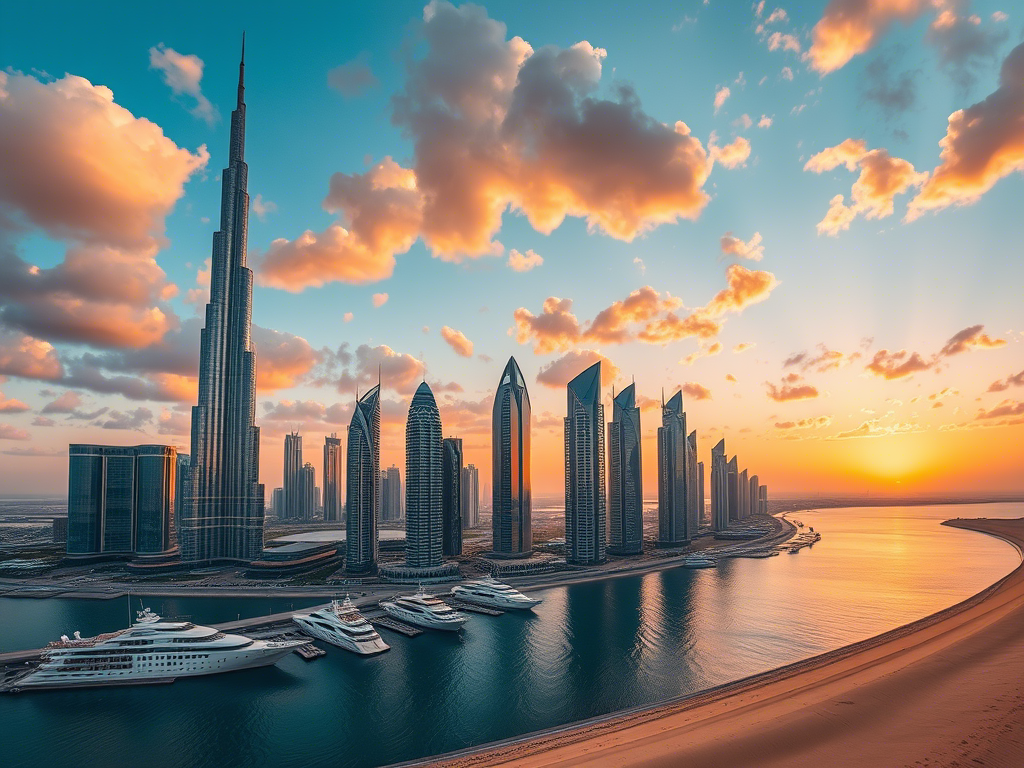
Supply Pipeline Dynamics: Understanding Balance for Risk Management
While widespread optimism characterizes most real estate trends discussions, sophisticated investors recognize the critical importance of understanding supply pipeline dynamics and potential absorption capacity constraints. Market intelligence suggests that Dubai expects approximately forty-five thousand new residential units during 2026, with similar volumes projected through 2027 and 2028, representing supply increases approaching ninety percent compared to historical delivery levels.
This substantial supply influx naturally raises legitimate questions about potential oversupply scenarios, particularly within the apartment segment where new inventory concentrates most heavily. However, multiple fundamental factors suggest that demand absorption capacity remains robust enough to maintain market equilibrium without triggering significant price corrections. Dubai’s population growth trajectory, now projected to continue at four to five percent annually through the decade, creates organic housing requirements that absorb substantial new supply simply through demographic expansion rather than speculative demand.
International buyer interest provides crucial additional demand support, particularly from markets experiencing economic uncertainty, currency devaluation, or political instability that drives capital flight toward perceived safe havens. Recent transaction data indicates that foreign investors account for approximately eighty-nine percent of Dubai property purchases during the first quarter of 2026, demonstrating that the market draws genuine international capital rather than depending exclusively on local speculation. These international buyers seek Dubai’s political stability, favorable tax environment, and lifestyle quality that few alternative destinations can match.
Strategic investors focus their attention on developments within submarkets demonstrating limited pipeline concentrations or possessing superior location advantages that insulate them against broader supply pressures. Understanding comprehensive market stability dynamics and oversupply versus demand analysis becomes absolutely crucial for effective risk management while pursuing Dubai property investment opportunities that deliver promised returns without unexpected downside volatility.
The villa segment appears particularly insulated from oversupply concerns, with a projected 2026 delivery totaling just sixteen thousand units against sustained high-net-worth demand that significantly exceeds this supply. This structural supply-demand imbalance supports continued price appreciation for quality villa developments, making them defensive holdings within diversified portfolios seeking real estate investment in Dubai exposure that combines growth potential with downside protection.
Regional Diversification Beyond Traditional Dubai Focus
While Dubai naturally dominates transaction volumes and investor mindshare, the broader United Arab Emirates off-plan property investment landscape offers compelling diversification opportunities that sophisticated portfolios increasingly incorporate for geographic risk distribution and yield optimization. Abu Dhabi’s market exhibits distinctly different characteristics from Dubai, with ready property supply constraints driving villa price increases exceeding eighteen percent year-over-year. Prime communities, including Yas Island, Saadiyat Island, and Al Reem Island, witness consistent appreciation surpassing fifteen percent annually as limited supply meets growing demand from government sector professionals and international families attracted to the capital’s more relaxed lifestyle pace.
Ras Al Khaimah emerges as an increasingly interesting value proposition for investors willing to embrace emerging market characteristics in exchange for substantial entry price advantages. Comparable properties trade thirty to fifty-five percent cheaper than equivalent Dubai locations while delivering rental yields approaching twelve percent in select beachfront and mountain communities. The upcoming Wynn Resort development, scheduled for phased opening beginning in late 2026, promises to catalyze tourism-driven rental demand transformation, positioning early investors for substantial appreciation as this northern emirate develops its hospitality and entertainment infrastructure beyond current limited offerings.
For investors seeking meaningful geographic diversification within their UAE property portfolios while maintaining exposure to the broader market growth trajectory, exploring a comprehensive analysis of UAE off-plan property investment across Dubai, Abu Dhabi, and Ras Al Khaimah provides valuable frameworks for optimal capital allocation decisions that balance risk, return, and liquidity considerations across multiple markets simultaneously.
Seize the Exceptional 2026 Investment Opportunity
The remarkable confluence of favorable economic conditions, sustained population growth, transformative infrastructure development, and investor-friendly regulatory policies creates an exceptional environment for Dubai real estate investment throughout 2026 and into the near-term horizon. Whether your investment strategy targets steady rental income generation from mid-market apartments, aggressive capital appreciation through carefully selected off-plan acquisitions, or prestige positioning within ultra-luxury villa communities, Dubai’s multifaceted market offers clearly defined pathways aligned with virtually any legitimate investment objective.
Success within this dynamic and competitive landscape requires informed decision-making supported by expert guidance and comprehensive market intelligence that extends beyond superficial headline statistics. The twelve to fifteen percent annual returns that analysts now predict for strategically selected 2026 acquisitions represent substantial wealth creation potential, particularly when investors leverage off-plan structures that optimize capital efficiency through flexible payment arrangements that preserve liquidity while building equity positions.
The critical moment for strategic positioning exists right now. As supply pipeline projections suggest potential moderation beyond 2027 when current construction waves complete, and as prime locations across established communities approach full development density without available land for further expansion, current opportunities may represent optimal entry points that future investors will retrospectively recognize as pivotal wealth-building moments they unfortunately missed.
Transform Your Investment Portfolio Through Strategic Dubai Real Estate Positioning
The unprecedented opportunities within Dubai’s thriving real estate market during 2026 demand immediate attention from serious investors seeking portfolio diversification and exceptional returns. Whether you are pursuing high-yield rental properties that generate consistent monthly income, luxury villa investments that combine lifestyle benefits with capital appreciation, or strategic off-plan acquisitions that maximize capital efficiency through flexible payment structures, our expert team at Pre-Launch Properties stands ready to guide your journey toward achieving your financial objectives.
Complete the form on our website prelaunch.ae to receive personalized investment recommendations tailored precisely to your specific financial goals, risk tolerance, and investment timeline.
Connect with our dedicated specialists directly:
- Phone: (+971) 52 341 7272
- Email: sales@mbrproperties.ae
Our experienced advisors provide exclusive access to pre-launch projects before public release, comprehensive market analysis that identifies optimal opportunities, and complete transaction support ensuring your Dubai property investment achieves maximum performance. Begin building sustainable wealth through Dubai’s dynamic real estate market today.
Frequently Asked Questions About Dubai Real Estate Investment in 2026
What returns can investors realistically expect from Dubai property investments during 2026?
Market analysts now project that carefully selected Dubai property investment opportunities during 2026 could deliver compounded annual returns ranging from twelve to fifteen percent through project completion cycles and initial rental phases. These projections reflect sustained demand drivers including population growth exceeding four percent annually, international buyer interest that accounts for eighty-nine percent of transactions, and controlled supply dynamics that prevent destabilizing oversupply scenarios. Returns naturally vary significantly by property type, location selection, and investment strategy, with off-plan projects and emerging communities often delivering higher yields compared to established premium zones that prioritize capital preservation over aggressive growth.
Which specific areas within Dubai offer the most attractive investment opportunities in 2026?
Strategic opportunities exist across multiple distinct price segments that serve different investor profiles. Premium investors seeking prestige and stability focus on Palm Jumeirah, Emirates Hills, and Downtown Dubai addresses that deliver eight to fourteen percent appreciation alongside lifestyle benefits. Mid-market investors targeting optimal yield generation concentrate on Jumeirah Village Circle, Dubai Investment Park, and Dubai Silicon Oasis neighborhoods that offer seven to twelve percent rental returns at accessible entry prices starting around four hundred thousand dirhams. Growth-focused investors with longer time horizons explore Dubai South, Mohammed Bin Rashid City, and Dubai Hills Estate communities that analysts project could experience thirty-five to fifty percent capital appreciation by 2030 through infrastructure development and community maturation.
How do off-plan properties compare against ready properties for investment purposes in 2026?
Off-plan properties typically offer twenty to thirty-five percent lower acquisition costs compared to completed units with identical specifications, enabling significant capital efficiency advantages that allow portfolio diversification. Flexible payment structures that spread investment commitments across construction periods reduce upfront capital requirements from typical seventy to eighty percent down payments for ready properties to just ten percent initially. Off-plan buyers benefit from customization options that add value and position themselves for substantial appreciation as projects approach completion when market pricing reflects finished product rather than construction-phase uncertainty. However, off-plan investments inherently carry construction delay risks and require longer investment horizons before generating rental income compared to immediately tenantable ready properties.
What specific role does the Golden Visa program play in supporting Dubai’s real estate market?
The Golden Visa program offers ten-year renewable residency rights for property investments exceeding two million dirhams, creating powerful incentives for permanent relocation to Dubai rather than temporary expatriate assignments. This program drives particularly strong demand within the villa segment, as recipients naturally prioritize spacious family homes that accommodate children and extended family rather than temporary apartment rentals. The residency security and pathway to permanent establishment that Golden Visas provide enhances Dubai’s appeal to high-net-worth families seeking stable international bases outside their home countries, supporting premium price points across quality developments while creating structural demand that persists regardless of short-term economic cycles.
Should investors be concerned about potential oversupply risks in Dubai’s real estate market during 2026?
While approximately forty-five thousand new units annually represent substantial supply increases compared to historical norms, multiple fundamental factors support healthy absorption without triggering price corrections. Dubai’s population grows by several hundred thousand residents yearly, creating organic housing demand that consumes significant new supply through genuine occupancy rather than speculation. International buyer interest remains extraordinarily robust, with foreign investors accounting for eighty-nine percent of first quarter 2026 purchases, demonstrating genuine capital inflows rather than local market saturation. The villa segment shows particular resilience with limited new supply of just sixteen thousand units against sustained high-net-worth demand. Strategic investors focus on developments within submarkets demonstrating favorable localized supply-demand balances rather than avoiding the market entirely based on aggregate citywide supply figures that ignore critical geographic nuances.