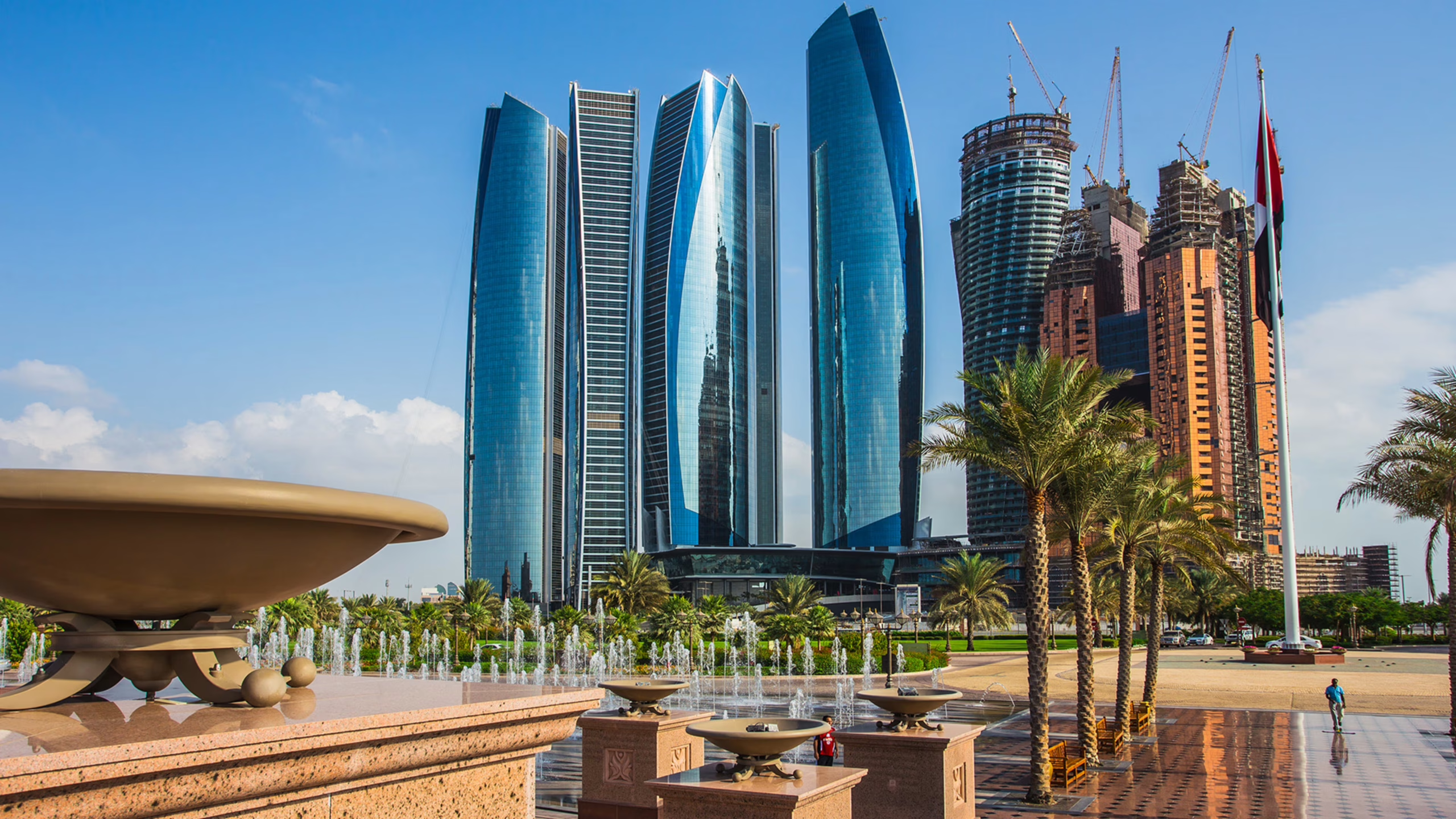
Global headlines have grown louder. Trade tensions simmer, geopolitical flashpoints multiply, and nervous investors worldwide are quietly pulling back from emerging markets. Yet, in Abu Dhabi’s real estate corridors, something quietly confident is happening: the phones keep ringing, the prelaunch enquiries keep arriving, and the numbers keep climbing.
In January 2026, global consultancy ValuStrat released its much-anticipated Abu Dhabi Real Estate Market Outlook 2026, and buried within its measured, data-driven language was a figure that stopped many investors mid-scroll: residential capital values are forecast to grow by 16% in 2026 — up from 13% the previous year. That is not a whisper of optimism. That is structural confidence written in data.
This article unpacks why that number matters, what it means for prelaunch property buyers in Abu Dhabi, and why the emirate’s real estate story is playing out on a different frequency from global noise. If you are considering off-plan investment in the UAE, read this before anyone else has the chance to tell you to wait.
The ValuStrat 16% Forecast: What It Actually Means
Let’s be precise about what ValuStrat is saying. The firm’s Outlook 2026 report does not project a speculative spike driven by hot money or hype. Instead, it identifies a structural acceleration — capital value growth rising from 13% in 2025 to 16% in 2026 — underpinned by three pillars:
| Pillar | 2025 Figure | 2026 Projection |
| Residential Capital Value Growth | 13% | 16% |
| Residential Rental Growth | ~5% avg | 6% avg |
| Residential Occupancy Rate | ~88% | ~90% |
| New Apartment Supply (actual handovers) | ~5,800 units | ~6,500–7,000 units |
| Office Rental Growth (Grade A) | 28%+ annually | Up to 20% additional |
Source: ValuStrat Abu Dhabi Real Estate Market Outlook 2026, Khaleej Times
A particularly noteworthy signal: apartments are projected to outperform villas in capital appreciation for the first time in recent memory. This reflects a decisive shift in buyer preference toward modern, amenity-rich, lifestyle-oriented communities — precisely the type of developments that dominate today’s prelaunch property pipeline.
The War News Cycle: Does It Actually Hurt Abu Dhabi?
Every real estate bull market eventually meets a news cycle that tests it. The question for savvy investors is not whether bad news exists — it always does — but whether the underlying fundamentals are insulated from that noise.
The answer, in Abu Dhabi’s case, is a qualified but confident yes, for three reasons:
1. Non-Oil GDP Is the Real Engine
Abu Dhabi has been engineering its economic diversification story for years, and by 2026, that work is paying visible dividends. Strong non-oil sector activity is the primary demand driver cited in ValuStrat’s report. When an economy’s real estate demand is driven by economic diversification rather than commodity prices, geopolitical volatility hits differently — it rattles sentiment briefly but does not drain the structural demand base.
2. Population Growth Is Relentless
A 7.5% population increase in 2024 — highlighted in the market data — created sustained housing demand heading into 2026. People are not moving to Abu Dhabi on speculation; they are moving for jobs, quality of life, business opportunities, and long-term residency. That is a demand floor that bad headlines cannot easily erase.
3. Supply Discipline Is Working In Buyers’ Favour
Despite a pipeline of around 16,362 units (64% apartments, 36% villas and townhouses), actual handovers are expected at only 6,500 to 7,000 units — a familiar pattern of measured delivery that keeps supply tight and prices supported. Projected occupancy of 90% reinforces upward pressure across submarkets, meaning that anyone who secures a unit now, at prelaunch pricing, is entering a market where the supply clock is always running slower than demand.
Why Prelaunch Is the Smartest Entry Point Right Now
If 16% capital value growth is the destination, prelaunch is the boarding gate. Buying before a project launches publicly gives investors two compounding advantages: entry at below-market pricing and the full benefit of appreciation between contract and handover.
Understanding how payment plans work for off-plan properties is critical at this stage. Abu Dhabi’s developer community has responded to buyer caution by structuring flexible, staggered payment plans — many with 40–60% post-handover terms — meaning that buyers can lock in today’s price while spreading their financial commitment across construction milestones.
| Prelaunch Advantage | What It Means for You |
| Below-market entry price | Lock in value before public launch price adjustments |
| Flexible payment plans | Lower upfront capital commitment; spread over milestones |
| Capital appreciation runway | Full 16% growth cycle ahead before or at handover |
| First-mover unit selection | Best floors, orientations, and views secured early |
| UAE Golden Visa eligibility | Properties above AED 2M unlock 10-year residency |
Apartments Are the New Stars: What the Data Is Telling Us
The ValuStrat report’s insight about apartments outperforming villas deserves its own spotlight. This is not a casual observation — it signals a demographic and lifestyle shift in who is buying in Abu Dhabi, and what they value.
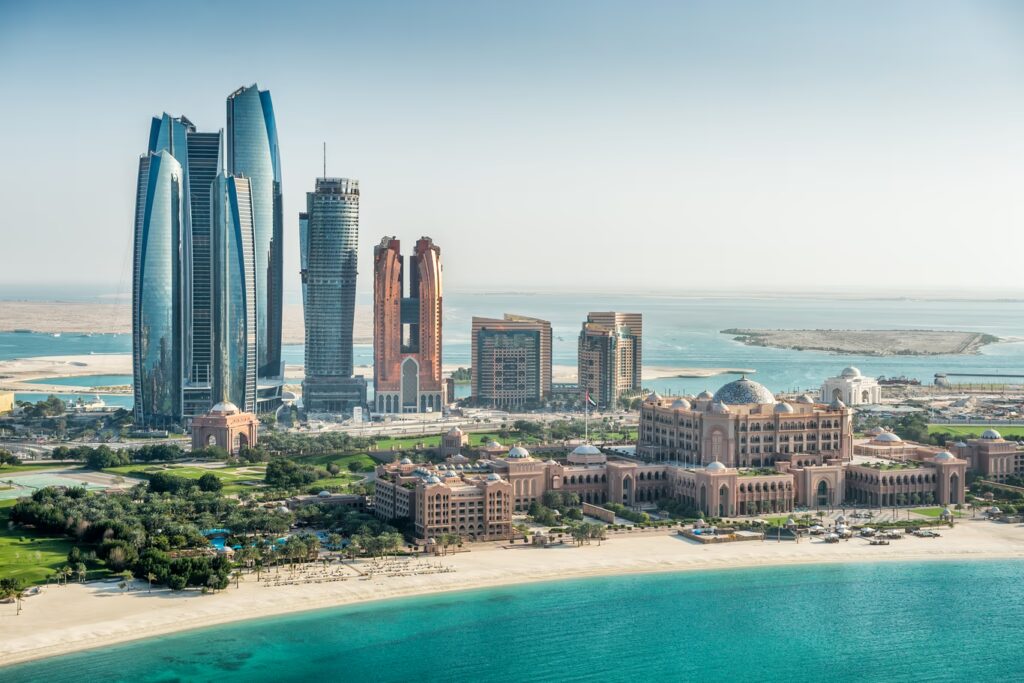
Young professionals, remote workers, international business owners, and globally mobile families are converging on communities that offer walkability, curated amenities, and proximity to economic hubs. Areas like Al Reem Island, Yas Island, Saadiyat Island, and Masdar City are seeing acute demand pressure — and it is precisely in these submarkets where today’s prelaunch apartment inventory is concentrated.
For those exploring a wide array of off-plan choices in Dubai and the UAE, the Abu Dhabi apartment story in 2026 is arguably the more compelling proposition — less competitive than Dubai’s overcrowded premium tier, yet delivering comparable or superior return metrics.
The Mortgage Tailwind: Lower Rates, Bigger Opportunity
One detail that market watchers should not overlook: the UAE Central Bank reduced interest rates to 3.65% in December 2025, improving mortgage affordability across mid-market areas such as Al Reef and Masdar City. For first-time buyers who had been sitting on the sidelines waiting for the right moment, that rate adjustment changed the calculus significantly.
Combined with the 16% capital value forecast, this means that borrowing costs are heading down at the same time as asset values head up — a rare and powerful confluence that historically marks the early stages of a sustained property boom rather than the late stages.
Abu Dhabi vs Global Alternatives: The Relative Value Case
One of ValuStrat’s sharper observations is that Abu Dhabi continues to benefit from its perceived relative value versus global peers. When you compare AED 1,005 per sq ft (the Q3 2025 citywide weighted average) against prime real estate markets in London (USD 1,200–2,000+ per sq ft), Singapore (USD 1,500+), or even Dubai’s own average of AED 1,689 per sq ft, Abu Dhabi still offers a meaningful discount — with a 16% growth forecast attached.
| Market | Avg. Residential Price (per sq ft) | 2026 Growth Forecast |
| Abu Dhabi | AED 1,005 (~USD 274) | 16% (ValuStrat) |
| Dubai | AED 1,689 (~USD 460) | ~8–10% (various forecasts) |
| London (Prime) | USD 1,200–2,000+ | Flat to 2% |
| Singapore | USD 1,500+ | 3–5% |
Sources: ValuStrat Q3 2025 Benchmarks, Global Property Guide 2026, Knight Frank
That is a compelling case for anyone doing a global capital allocation review. Abu Dhabi offers the value-of-entry that Dubai had five years ago, with the institutional quality and governance credibility that newer markets cannot yet claim.
Key Prelaunch Locations to Watch in Abu Dhabi 2026
Not all submarkets will capture the 16% equally. Based on ValuStrat data and transaction concentration patterns reported by Abu Dhabi Real Estate Centre (ADREC), the following areas are seeing concentrated activity:
| Location | Asset Type Focus | Key Demand Driver |
| Al Reem Island | Apartments | ADGM expansion, urban connectivity |
| Yas Island | Apartments & Villas | Disney resort announcement, tourism |
| Saadiyat Island | Luxury Apartments & Villas | Cultural district, global brand residences |
| Masdar City | Mid-market Apartments | Mortgage affordability, sustainability |
| Al Reef | Villas & Townhouses | Rental affordability, family demand |
Investors looking at top off-plan investment opportunities in 2025 and beyond will find that Abu Dhabi’s concentration in these nodes reflects deliberate master-planning — these are not speculative outpost developments but integrated communities with proven infrastructure.
The Developer Confidence Signal
Here is a metric that rarely makes headlines but tells a sophisticated story: developers are not pulling back. Despite the global noise, Abu Dhabi’s development pipeline remains active, with 6,500 to 7,000 new apartment units scheduled for 2026 handover — representing a measured expansion, not a flood. This discipline is intentional.
Aldar Properties, the emirate’s dominant developer, and a roster of international co-developers continue to release prelaunch inventory in tranches, maintaining pricing integrity while allowing early buyers to benefit from appreciation between booking and completion. This is precisely what investing in off-plan apartments in Dubai and Abu Dhabi looks like when done right — measured supply meeting strong structural demand.
What First-Time Buyers Need to Know
If you are a first-time buyer wondering whether this is the right moment, the data gives you a cleaner answer than most market commentators will. Refer to our detailed guide on what you need to know about buying off-plan properties in Dubai and the UAE — the principles apply equally in Abu Dhabi.
Three things first-time buyers should internalise from the current Abu Dhabi context:
- Timing is compounding: Every quarter you delay is a quarter in which the 16% growth cycle runs without you.
- Flexibility is built in: Post-handover payment structures mean you do not need to commit your full capital upfront.
- Residency is a bonus: Properties above AED 2 million qualify buyers for the UAE Golden Visa — 10-year residency for you and your family, with full lifestyle and business access.
Is the 16% Forecast Realistic Given Global Headwinds?
This is the question every serious investor should ask, and it deserves a serious answer. ValuStrat is a globally recognised valuation and advisory firm — its forecasts are not social media optimism. They are produced by a team with deep market access, proprietary transaction data, and a methodology that has accurately called Abu Dhabi’s trajectory across multiple cycles.
The 16% figure is supported by: a tight supply pipeline, a growing population (7.5% increase in 2024), improving mortgage affordability, Grade A office vacancy at record lows (96% occupancy) and a hospitality sector logging its best-ever metrics. When every sector of an economy is performing simultaneously, residential real estate rarely lags behind. To explore more on how this connects to broader trends, take a look at the hottest off-plan developments and what to watch in 2025–2026.
Secure Your Position in Abu Dhabi’s 16% Growth Story
The data is not ambiguous. Abu Dhabi entered 2026 with the strongest underlying residential momentum it has recorded in years, and the prelaunch window — the point at which buyers capture the maximum appreciation runway — is open right now.
At Prelaunch.ae, we give you exclusive access to Abu Dhabi and Dubai’s most sought-after prelaunch and off-plan property investment opportunities before they reach the open market. Our team of experienced advisors will guide you through project selection, payment structuring, and Golden Visa eligibility — from your first enquiry to your keys.
Do not let global noise drown out a local signal this clear.
Fill up the enquiry form on our website at prelaunch.ae today to get your personalised investment roadmap.
Contact us directly:
Abu Dhabi’s 16% growth forecast is not a promise — it is a projection backed by data, and the best time to act on it is before everyone else reaches the same conclusion.
Frequently Asked Questions (FAQs)
Q1: What is ValuStrat’s forecast for Abu Dhabi residential property in 2026?
ValuStrat forecasts 16% residential capital value growth in Abu Dhabi for 2026, up from 13% in 2025. Apartment values are projected to outperform villas for the first time in recent years.
Q2: Is Abu Dhabi real estate a safe investment amid global uncertainty?
Abu Dhabi’s property market is driven by structural pillars — non-oil GDP growth, consistent population expansion, and disciplined supply — rather than speculative demand. These fundamentals provide meaningful insulation from global geopolitical volatility.
Q3: What are the best areas for prelaunch property investment in Abu Dhabi?
Al Reem Island, Yas Island, Saadiyat Island, Masdar City, and Al Reef are the highest-activity submarkets, based on ADREC transaction data and ValuStrat’s submarket analysis.
Q4: How do payment plans work for prelaunch properties in Abu Dhabi?
Most prelaunch projects offer staggered payment plans with 40–60% post-handover terms. This allows buyers to lock in current pricing while spreading capital commitment across the construction timeline.
Q5: Can I get a UAE Golden Visa through property investment in Abu Dhabi?
Yes. Properties valued at AED 2 million or above qualify buyers for the UAE 10-year Golden Visa, which covers the investor and their immediate family, granting full residency benefits.
Q6: Why are apartments outperforming villas in Abu Dhabi in 2026?
A growing cohort of young professionals, mobile international families, and remote workers is prioritising modern, amenity-rich apartment communities with urban connectivity — a shift that is concentrating capital appreciation in the apartment segment.